


I approached Prime Opinion: Earn Money App as a small, practical way to turn spare moments into rewards rather than as a replacement for regular income. It is a free Lifestyle app from Prime Opinion AB that connects users with branded paid surveys and lets them exchange earned points for gift cards. That basic idea is easy to understand, but the real question is whether the complete journey—from opening the app to finishing a questionnaire and reaching a reward—feels worthwhile.
My overall impression is that it works best when I treat it like a flexible pocket activity. I can check for an available survey when I have a few quiet minutes, answer questions carefully, and decide whether the expected reward justifies the time. The experience is more useful for occasional spending money or a gift card than for anyone expecting predictable earnings. The important trade-off is convenience versus consistency: starting is simple, but the amount of suitable survey work can change from one visit to the next.
From an empty moment to a completed reward
Starting with the right expectation
The app is rated for Everyone, which fits its straightforward presentation and general-purpose lifestyle focus. It has attracted over a million installs, with an average rating of 4.5 from around 260 thousand ratings, so it is clearly familiar to a large audience. Those figures suggest that the basic concept is accessible, but they should not be mistaken for a promise that every user will receive the same survey availability or reward pace.
I would begin by deciding what I want from it. If I am waiting for an appointment, commuting as a passenger, or relaxing at home, a survey app can give that unused time a small purpose. If I need a fixed amount by a particular day, I would choose another option instead. Survey invitations depend on matching the audience a research project needs, so the app is naturally less predictable than a normal part-time task.
The free price makes trying it low-risk from a cost perspective. Still, free does not mean effortless. My time, attention, and patience are the real inputs. The best way to judge the app is to compare the reward offered with the time and concentration required, not simply to collect every survey that appears.
Finding a survey that fits the moment
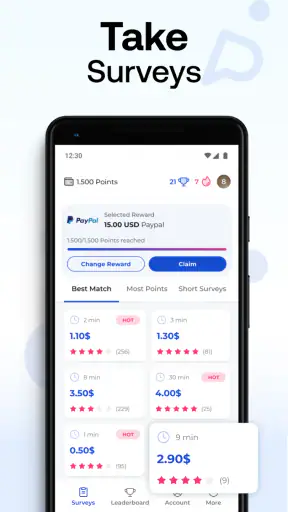
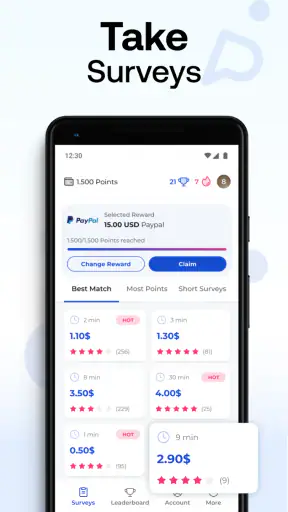
After opening the app, I would scan the available opportunities before committing. I would look at the apparent length, the reward shown, and whether the subject sounds relevant to me. This quick check prevents one of the most common mistakes with survey platforms: starting everything immediately and then discovering that a longer questionnaire does not suit the time available.
A useful routine is to reserve longer surveys for a quiet setting and use short gaps for smaller opportunities. I would not begin a detailed questionnaire while distracted, walking, or about to lose my connection. A rushed answer can lead to mistakes, and inconsistent responses can make the experience more frustrating. The app rewards a deliberate workflow more than frantic tapping.
Another practical tip is to keep personal answers consistent. Survey questions sometimes revisit the same general information in different wording. I would answer naturally rather than trying to guess what the survey wants to hear. Trying to optimize every response can make the process slower and less comfortable, while honest answers are the sensible approach for research-based questionnaires.
Moving through the questionnaire
The central task is familiar: read each question, choose the answer that actually describes me, and continue until the survey is complete. The branded format gives the activity a clearer purpose than an anonymous points game, because I understand that the answers are being collected for research. That does not make every questionnaire equally interesting, but it helps explain why some surveys focus on shopping habits, media, products, or everyday decisions.
I found that concentration matters more than speed. Some questions are easy to answer quickly, while others require remembering a recent purchase or comparing several options. I would pause when a question is ambiguous instead of tapping through it. The extra moment is worthwhile because careless answers can make the whole session feel wasted.
This is also where the app may not suit everyone. People who dislike repetitive questions, personal preference surveys, or screen-based microtasks will probably find the routine tiring. It is not a game with entertaining progression, and it does not turn every spare minute into an exciting activity. Its appeal depends on whether the possibility of a future gift card makes the answering worthwhile.
The first handoff: from my answers to the research process
When I submit a survey, the experience shifts from something I control to something handled by the survey provider and the app. That handoff is important. I can provide careful answers, but I cannot control how a research project evaluates eligibility, whether a survey closes, or how quickly the associated points become available. Understanding that boundary keeps expectations realistic.
For that reason, I would avoid treating an unfinished questionnaire as guaranteed earnings. A survey can appear suitable at first and then ask screening questions that determine whether I belong to the intended audience. This is normal for market research, but it can feel disappointing when time has already been spent. I would regard each opportunity as a possible contribution, not as a fixed payment for pressing the start button.
The app’s value is strongest when I accept this uncertainty as part of the format. If I need complete control over the work and outcome, a freelance task or a conventional paid shift is a better match. Prime Opinion is designed around matching people with research opportunities, so the handoff is built into the experience rather than being an unusual failure.
Watching points become something usable
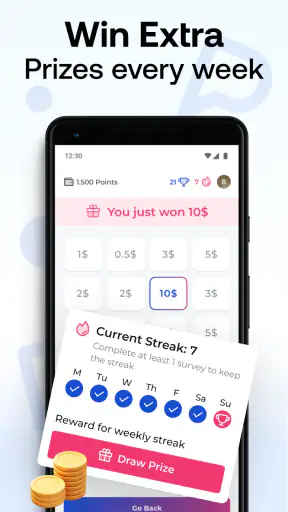
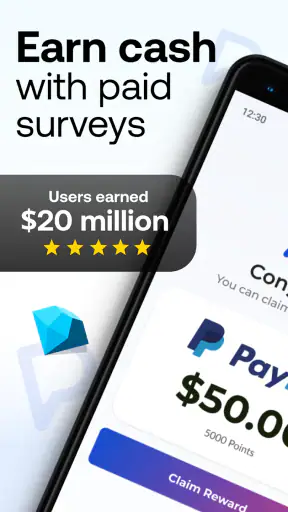
Once points accumulate, the next step is turning them into a reward. The store summary specifically presents gift cards as the destination, which gives the points a practical purpose. I would think of the balance as a gradual path toward a planned purchase rather than money for everyday bills. That mindset makes the waiting period easier and reduces the temptation to spend time on surveys that do not feel worthwhile.
A good personal workflow is to choose a target before starting. For example, I might decide that the balance will go toward a small digital purchase, a present, or a treat that I would otherwise pay for directly. This creates a clear outcome and helps me judge whether the time spent is reasonable. Without a target, points can feel abstract and the activity can become an endless search for the next questionnaire.
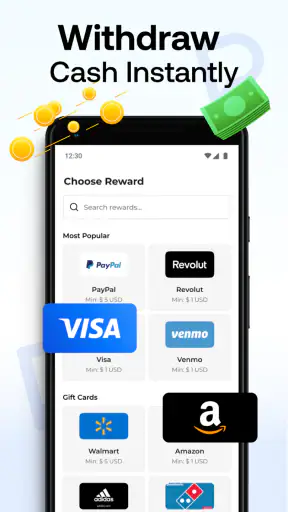
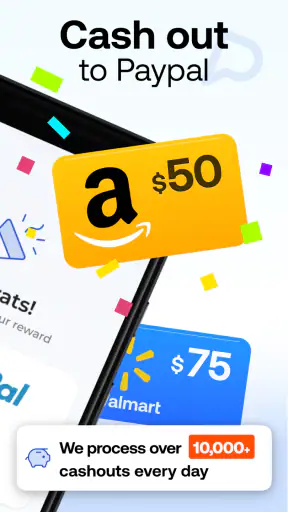
The second handoff happens when the in-app balance is exchanged for a gift card. At that point, the reward leaves the survey environment and becomes useful elsewhere. I would check the available redemption choices inside the app before investing heavily, because the usefulness of a rewards platform depends on whether its options fit my needs. A gift card I would never use is not a meaningful return, even if earning it was easy.
What the finished outcome feels like
The best-case result is uncomplicated: I use spare time, complete suitable surveys, build a points balance, and redeem it for a gift card. That outcome is modest but satisfying when the activity fits naturally into my day. I can imagine using it during a quiet evening when I am already browsing on my phone, rather than creating a separate block of time solely for earning.
A realistic scenario would be a student waiting between classes or a commuter sitting at home before leaving for work. They could open the app, review the available surveys, choose one that matches the time they have, and stop when the next task looks too long. Over several casual sessions, the points may become useful for a small purchase. The key is that the app fills existing downtime instead of competing with paid work, study, rest, or family responsibilities.
I would not describe the result as guaranteed income. The outcome depends on survey availability, suitability, completion, and the eventual redemption choice. That makes the app more comparable to a rewards hobby than to employment. For someone who wants a low-commitment way to work toward gift cards, that can be perfectly acceptable. For someone measuring success by an hourly wage, it is likely to disappoint.
Where the flow breaks down
The main friction is the possibility of investing attention without reaching the desired outcome. Screening questions can interrupt a survey, and a questionnaire may not remain available long enough for every user to complete it. Even when the app is functioning normally, the supply of relevant surveys can vary. This makes it difficult to plan a reliable daily routine around the platform.
Another weakness is mental fatigue. Repeatedly answering similar questions can become dull, especially when I am trying to maintain accuracy. The app is not a good choice for someone who wants entertainment first and rewards second. A casual game may be better for relaxation, while a task marketplace may be better for people who want a clearer connection between a specific job and a specific payment.
I also see a time-management risk. Because opening the app takes only a moment, it is easy to keep checking for another opportunity after finishing one. I would set a simple limit, such as using it only during otherwise idle periods. That prevents a small rewards activity from quietly taking over time that would be better spent on work, rest, or something more valuable.
How it compares with familiar alternatives
Compared with cashback apps, this approach asks for direct participation rather than waiting for a purchase to generate a return. That can make the path to a reward more active, but it also means I must spend attention answering questions. Cashback is usually a better fit when I already intend to shop; Prime Opinion is more relevant when I have time but no purchase planned.
Compared with freelance platforms, it is easier to understand and requires less commitment. I do not need to prepare a portfolio or negotiate a project before beginning a survey. The trade-off is that surveys offer less control over the type and quantity of work. A freelancer can pursue a higher-value task, while a survey participant accepts whatever matches the current audience requirements.
Compared with ordinary loyalty programs, the app can feel more direct because the activity is specifically tied to research participation. However, a store loyalty scheme may be better for someone who already shops regularly at one retailer and wants rewards automatically. I would choose this app when flexibility matters more than maximizing returns from purchases I was going to make anyway.
Who will get the most from it
I think the strongest audience is patient smartphone users who enjoy short, structured activities and have realistic expectations about gift-card rewards. It can suit people with irregular pockets of free time, especially when they are comfortable stopping after a survey no longer feels worthwhile. The free entry also makes it easy to test personally rather than relying only on someone else’s experience.
It is less suitable for anyone who needs dependable earnings, dislikes answering personal preference questions, or becomes frustrated when an opportunity does not lead directly to completion. I would also skip it if I know I will feel pressured to check constantly. The app should remain optional and lightweight; it is not worth allowing a small balance to dictate my schedule.
The developer, Prime Opinion AB, has positioned the product clearly around paid surveys and gift-card redemption. The current version is 1.1.93, and the minimum operating system is Android 7.0, so users on older devices should check compatibility before planning around it. Those details matter less than the workflow itself, but they are useful when deciding whether the app will fit an existing phone.
My practical routine for using it
I would start by checking the reward destination, then browse rather than automatically launch the first survey. I would choose an opportunity that matches the time and attention I actually have, answer consistently, and stop if the questionnaire becomes unsuitable. Afterward, I would review the points balance and keep a simple mental record of whether the session felt worthwhile.
I would also protect the quality of my answers. A quiet environment, a stable connection, and enough time to read are more valuable than trying to complete a survey while multitasking. If I were interrupted, I would rather leave the app and return later when possible than guess through questions. This approach does not guarantee a better result, but it makes the experience more honest and less stressful.
Finally, I would redeem with a purpose instead of treating the points as an invitation to keep going indefinitely. The moment a gift card can support something I already planned to buy is the clearest measure of success. If several sessions feel tedious without moving toward a useful reward, I would take a break or switch to a different way of using my free time.
My recommendation after following the full journey
Prime Opinion: Earn Money App is a reasonable option for casual survey participation, particularly if gift cards are useful to you and you already have spare phone time. I like the clarity of its input-to-outcome path: answer branded surveys, accumulate points, and exchange them for rewards. The experience is approachable, free, and easy to test without making a major commitment.
My recommendation comes with a firm qualification: use it as a flexible side activity, not as a dependable income source. The uncertain survey flow, possible screening interruptions, and repetitive nature are genuine limitations. Use it when the time is otherwise idle, judge each survey by the attention it demands, and keep the final reward in view. With that mindset, the app can turn scattered spare moments into occasional value. Without it, the search for the next survey may cost more time and patience than the gift card is worth.


